
What is Industrial Fire Safety Equipment? Complete Guide for Factories
September 03, 2026 · Bipin valani
Introduction
Every year, factories and manufacturing units across industries face significant financial and human losses due to fire-related incidents, losses that could often be prevented with the right safety measures in place. This is where industrial fire safety equipment becomes essential. From detecting the earliest signs of a fire to suppressing flames before they spread across a facility, this equipment forms the backbone of workplace fire protection. If you're setting up a new facility or reviewing your existing safety protocols, understanding the different types of industrial fire extinguishers is a good place to start. In this guide, we'll walk through what this equipment includes, why it matters for factories, and how businesses can choose the right systems for their operations.

What is Industrial Fire Safety Equipment?
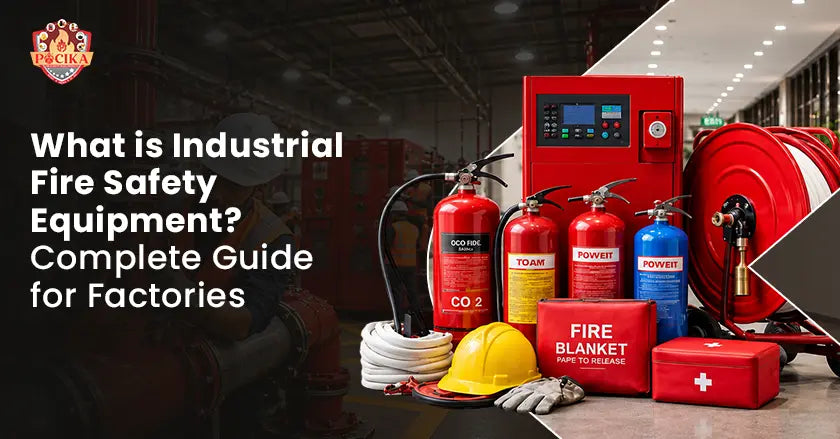
Industrial fire safety equipment refers to the tools, systems, and devices used to detect, control, suppress, and prevent fires in environments like factories, warehouses, chemical plants, and manufacturing units. Unlike basic fire safety tools found in offices or homes, this equipment is built to handle harsher operating conditions and more complex hazards, including flammable chemicals, high-voltage machinery, and combustible dust common in production settings.
Factories need specialized industrial fire protection equipment because their risk profile is very different from commercial or residential spaces, heavy machinery, bulk material storage, and processes that generate heat or friction all raise the stakes. Common causes of industrial fires include electrical faults, poorly maintained machinery, improper storage of flammable materials, and human error. When a facility isn't equipped to detect and respond to these triggers quickly, the results can be costly for both safety and operations.
Types of Industrial Fire Safety Equipment
Factories typically rely on a combination of detection, suppression, and protective systems working together. No single device can address every fire risk, which is why a layered approach covering everything from early warning systems to personal protective gear is the industry standard.
Fire Detection & Alarm Systems
Early detection is often the difference between a minor incident and a major disaster. Smoke detectors, heat detectors, and flame detectors are typically installed based on the specific risks present in different zones of a facility; for instance, flame detectors are commonly used near areas handling flammable liquids, while heat detectors work better in dusty environments where smoke detectors may trigger false alarms. Gas leak detectors add another layer of protection in facilities dealing with combustible gases. These devices are usually connected to centralised fire alarm systems, complete with manual call points, sirens, and strobe lights, ensuring that any detected threat immediately alerts workers and safety personnel across the site.
Fire Suppression, Extinguishers & PPE
Once a fire is detected, suppression systems take over to control or extinguish it before it spreads. Automatic sprinkler systems remain the most widely used solution, though facilities handling electrical equipment or sensitive materials often opt for foam-based systems, CO2 systems, or water mist systems that minimize damage to equipment while putting out flames. Portable fire extinguishers remain a critical first line of defense and are generally classified by the type of fire they're designed to handle:
-
Class A – for ordinary combustibles like wood and paper
-
Class B – for flammable liquids
-
Class C – for electrical fires
-
Class D – for combustible metals
-
Class K – for cooking oil and fat fires
Alongside detection and suppression, personal protective equipment such as fire-resistant clothing and emergency escape respirators helps workers evacuate safely during an incident you can explore our detailed guide to industrial PPE for fire emergencies for more on selecting the right gear. Passive fire protection measures, including fire-rated doors, fireproof walls, and properly sealed cable and duct openings, also play a quiet but important role by containing fires and slowing their spread even before active systems engage.

Fire Safety Equipment Requirements by Industry
The specific industrial fire safety equipment requirements vary considerably by sector depending on the materials and processes involved. Chemical and petrochemical plants generally require the most extensive protection, given the presence of volatile substances, and often rely on foam suppression systems alongside continuous gas monitoring. Manufacturing and assembly units, where machinery generates consistent heat and friction, tend to prioritise sprinkler coverage and heat detection across production floors. Warehouses and storage facilities, which often house large volumes of combustible inventory, depend heavily on well-planned sprinkler zoning and clear evacuation routes. Our warehouse fire safety checklist covers this in more detail. The oil, gas, and energy sector, meanwhile, typically requires the most advanced systems, including explosion-proof detectors and specialised suppression agents designed for high-risk environments.
Regulatory Standards & Compliance
OSHA & NFPA Standards
In the United States, the Occupational Safety and Health Administration (OSHA) sets baseline requirements for fire safety in industrial workplaces, covering everything from extinguisher placement to emergency action plans. The National Fire Protection Association (NFPA) goes further with detailed technical codes NFPA 10 governs portable fire extinguishers, NFPA 13 covers sprinkler system installation, and NFPA 72 addresses fire alarm and signalling systems. Together, these standards form the technical foundation that most industrial fire protection systems are designed and installed against.
Local/Regional Fire Codes
Beyond federal guidelines, most regions and municipalities enforce their own fire codes, which can vary based on local building regulations, climate considerations, and industry-specific risks. Factories should work closely with local fire departments and certified fire safety consultants to ensure their industrial fire safety equipment meets both national standards and any additional regional requirements, since non-compliance can result in penalties as well as increased safety risk.
How to Choose the Right Equipment for Your Factory
Selecting the right industrial fire safety equipment starts with a thorough fire risk assessment a process that identifies specific hazards present in a facility, from flammable material storage to electrical load points. From there, decisions should factor in the size of the facility, the nature of materials being handled, and the physical layout, since a sprawling warehouse has very different needs compared to a compact assembly unit. If you haven't conducted one recently, our fire risk assessment guide walks through the process step by step. Equally important is establishing a regular maintenance and inspection schedule, since even the most advanced systems lose effectiveness if extinguishers aren't recharged, detectors aren't tested, or sprinkler heads become obstructed over time.
Benefits of Investing in Fire Safety Equipment
The value of investing in reliable industrial fire safety equipment extends well beyond regulatory compliance. Most directly, it protects the people working on the factory floor, reducing the risk of injuries and fatalities during an incident. It also minimizes operational downtime a well-contained fire that's detected and suppressed early means production can resume far sooner than after an uncontrolled blaze. There are financial advantages too: insurers often offer reduced premiums to facilities with certified, well-maintained fire protection systems, and avoiding compliance penalties adds further savings over time. In this sense, industrial fire protection equipment should be viewed less as a cost centre and more as a long-term investment in operational resilience.
Common Mistakes Factories Make with Fire Safety
Even well-intentioned facilities often fall short in a few predictable ways. Many factories delay routine maintenance, assuming equipment will work when needed without regular testing, a risky assumption that often proves costly. Others install the wrong class of fire extinguisher for their specific hazards, leaving gaps in protection despite appearing compliant on paper. Blocked fire exits and poorly marked evacuation routes remain surprisingly common, as does a lack of regular fire safety training for employees, who may not know how to respond correctly even when the right equipment is present. Addressing these gaps typically requires far less investment than the equipment itself, yet makes a significant difference in overall safety.
Conclusion
Fires remain one of the most preventable yet costly risks a factory can face, which is why investing in the right industrial fire safety equipment isn't optional it's foundational to running a safe, compliant, and resilient operation. From detection and suppression systems to proper training and regular maintenance, every layer of protection contributes to keeping workers safe and operations running smoothly. If you're looking to assess or upgrade your facility's fire protection systems, get in touch with Pocika's fire safety experts for a personalised facility assessment and recommendations tailored to your industry.