
Types of Fire Safety Equipment Every Industry Must Have
September 01, 2026 · Bipin valani
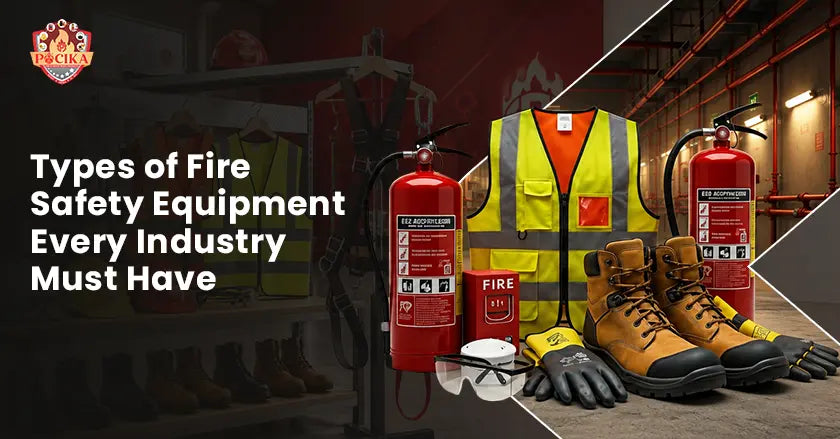
Types of Fire Safety Equipment Every Industry Must Have
Introduction
Every workplace, regardless of its size or sector, carries some level of fire risk, and that is exactly why investing in the right fire safety equipment has become a non-negotiable part of running a responsible business today. From compact offices to sprawling manufacturing plants, the presence of reliable fire protection equipment often decides whether an incident stays a minor scare or turns into a devastating loss. Before diving into the specifics, it helps to first understand our complete guide to fire extinguisher types to get a sense of how foundational this equipment really is across industries. In this blog, we will walk through the essential categories of fire protection equipment, why they matter, and how different industries approach fire protection differently based on their unique risks.

Why Every Industry Needs Fire Safety Equipment
Fires do not discriminate by industry, but the way they start, spread, and get controlled varies enormously depending on the environment. A textile unit deals with fast-spreading fabric fires, while a data centre worries about electrical fires that can destroy sensitive equipment in seconds. This is precisely why fire protection systems cannot be a generic, one-size-fits-all purchase. Regulatory bodies across the world, including fire codes modelled on NFPA standards and local fire safety acts, mandate specific fire protection systems based on occupancy type, building height, and the nature of materials stored on-site. Beyond compliance, the real motivation should be protecting human life first and physical assets second, because no amount of insurance coverage can undo the damage caused by inadequate preparedness. Businesses that treat fire safety equipment as a checkbox exercise rather than a genuine safety investment often pay a much higher price when an actual emergency strikes.
Core Categories of Fire Protection Equipment
Understanding these broad categories helps facility managers map out what their site actually needs, rather than over-investing in irrelevant systems or under-investing in critical ones.
Fire Detection Systems
Detection is the first line of defence, and it typically includes smoke detectors, heat detectors, and flame detectors depending on the environment. Smoke detectors work well in general office and retail spaces, while heat detectors are often preferred in kitchens or dusty industrial areas where smoke detectors would trigger false alarms constantly. Flame detectors, on the other hand, are common in high-risk zones like fuel storage areas where an early visual confirmation of flame is critical.
Fire Suppression Systems
Once a fire is detected, suppression systems take over. Automatic sprinklers remain the most widely used fire suppression systems globally because they respond instantly to heat and can control a fire before manual intervention is even possible. In areas with sensitive electronics or server rooms, clean agent suppression systems are preferred since they extinguish fires without damaging equipment through water or residue.
Fire Alarms and Notification Systems
An effective alarm system does more than make noise; it communicates the type and location of the emergency to occupants and emergency responders simultaneously. Modern fire alarm panels are often integrated with building management systems, allowing for automated actions like shutting down HVAC systems or unlocking emergency exits the moment an alarm is triggered.
Passive Fire Protection
Unlike active systems that respond to a fire, passive fire protection is built into the structure itself. Fire-rated doors, firestop materials, and fireproof cladding are designed to contain a fire within a specific zone, buying critical time for evacuation and for active suppression systems to work. This category is frequently overlooked, yet it plays a massive role in limiting the spread of fire within multi-storey buildings.
Personal Protective Equipment for Fire Emergencies
Fire-resistant clothing, gloves, helmets, and breathing apparatus fall under this category and are essential wherever employees may need to respond to or evacuate through a fire-affected area. Industries dealing with flammable chemicals or high-heat processes typically require specialised PPE that goes well beyond a standard fire safety kit.
Fire Extinguishers: A Category That Deserves Special Attention
Among all fire fighting equipment, portable extinguishers remain the most commonly deployed and are often the first tool used during an early-stage fire. Extinguishers are classified by the fire type they handle: Class A for ordinary combustibles like wood and paper, Class B for flammable liquids, Class C for electrical fires, Class D for combustible metals, and Class K for cooking oil fires common in commercial kitchens. Choosing the wrong type is one of the most dangerous mistakes businesses make, since using water-based extinguishers on an electrical fire can actively worsen the situation. Every facility should get a professional risk assessment done before finalising which combination of extinguishers suits its operations.

Industry-Specific Fire Safety Equipment Requirements
While the core categories remain broadly similar, the specific mix of fire fighting equipment required changes significantly across sectors. Manufacturing and industrial units generally need heavy-duty suppression systems, gas detection sensors, and extensive PPE due to the presence of machinery and flammable raw materials. Warehousing and logistics facilities, given their large open spaces and stacked inventory, rely heavily on sprinkler coverage and clear, unobstructed access to equipment throughout the storage area. Commercial offices and IT parks focus more on smoke detection, clean agent systems for server rooms, and well-marked evacuation routes since occupant density is typically higher. Healthcare facilities have some of the strictest requirements because patients may not be able to evacuate quickly, making passive fire protection and smoke compartmentalisation especially critical. Hospitality businesses such as hotels and restaurants need a careful balance of kitchen-specific suppression systems, guest room detectors, and trained staff who understand our step-by-step fire evacuation planning approach. Retail and shopping complexes, given the constant footfall, prioritise clear alarm audibility and strategically placed extinguishers near high-risk zones like electrical rooms and storage backrooms.
Emerging Technologies Shaping Fire Protection Systems
Fire safety is no longer limited to traditional detectors and extinguishers. AI-based fire detection systems can now analyse camera feeds in real time to identify smoke or flame patterns before conventional sensors even react, which is particularly valuable in large industrial facilities with vast open floors. IoT-enabled monitoring takes this further by allowing facility managers to track the health of every fire safety equipment unit remotely, receiving alerts when an extinguisher pressure drops or a detector battery needs replacement. These advancements are gradually becoming standard practice among businesses that want to stay ahead of compliance, and our guide to smart fire monitoring solutions offers a useful starting point for facilities considering this shift.
How to Choose the Right Fire Safety Equipment for Your Facility
Selecting appropriate fire protection equipment starts with a genuine risk assessment rather than copying what a neighbouring business has installed. Every facility should map out its high-risk zones, occupancy patterns, and material storage before deciding on equipment types and quantities. Placement matters just as much as selection; extinguishers and alarm pull stations should be easily visible and accessible, never obstructed by inventory or furniture. Equally important is maintenance, since even the best fire safety equipment becomes useless if it has not been inspected, serviced, or tested according to schedule. Most regulatory frameworks require periodic inspections, and businesses would do well to maintain a documented maintenance log that can also serve as proof of compliance during audits.
Common Mistakes Businesses Make with Fire Fighting Equipment
A surprising number of businesses install fire safety systems and then treat them as a one-time expense rather than an ongoing responsibility. Expired extinguishers, disconnected alarm panels, and untested sprinklers are far more common than most facility owners realise until an emergency exposes the gap. Another frequent oversight is inadequate employee training; even the most advanced fire protection systems are only as effective as the people who know how to use them. Skipping regular inspections is perhaps the costliest mistake of all, since minor faults that could have been fixed cheaply often escalate into complete system failures right when they are needed most.
Conclusion
Fire risks look different across every industry, but the underlying principle remains the same: the right fire safety equipment, properly maintained and paired with trained staff, is one of the most effective investments a business can make in protecting its people and its future. Whether it is detection systems, suppression equipment, passive protection, or the humble fire extinguisher, each component plays a distinct role in a layered defence strategy that no responsible business can afford to skip. If you are ready to assess your facility's current setup and close any gaps in your fire protection systems, get in touch with Pokika for a tailored consultation on the right equipment for your industry.